Need help right now? 999 NHS 111, option 2 Samaritans 116 123 Text SHOUT to 85258

Book a free 30-minute call Call 07825 599340

DBT-informed skills therapy: the four modules, one to one

Dialectical behaviour therapy (DBT) gives people with borderline personality disorder (BPD, often written as EUPD on NHS letters) practical skills for the moments emotions take over. I teach those skills one to one, at your pace. This page lists the core skills, explains how DBT-informed work differs from a full programme, and says when the full programme is the better choice.

An open notebook with a pencil sketch of a single rising and falling wave, a pen resting on the page

What is DBT-informed skills therapy?

DBT in Birmingham: NHS and private options

DBT was developed by the American psychologist Marsha Linehan for people with BPD who self-harmed. "Dialectical" means holding two things at once: accepting yourself as you are, and working to change. DBT-informed therapy uses DBT’s skills and ideas without the whole programme around them.

A full DBT programme has four parts: weekly individual therapy, a weekly skills group, phone coaching between sessions, and a consultation team that supports the therapists. I offer the first, and teach the skills inside it. I don’t run a group or offer phone coaching. I’m a PESI Certified DBT Skills Practitioner.

That’s why I call my work DBT-informed. It’s one part of how I treat BPD, and it’s where most people start with me, because skills make the worst days more manageable before we touch anything deeper.

The evidence

What’s the evidence for DBT skills?

DBT has more trials behind it than any other therapy for BPD. Most of that research tested the full programme, so here’s what applies to skills taught one to one.

  • First trial, 1991Linehan’s team compared a year of DBT with usual care for women with BPD who self-harmed. The DBT group self-harmed less, stayed in therapy more, and spent fewer days in hospital.Where it began
  • Cochrane review, 2020Across 75 trials, DBT was one of the two therapies that helped most, alongside MBT. The certainty of the evidence was low.Strongest evidence
  • NICE CG78, 1.3.4.5"For women with borderline personality disorder for whom reducing recurrent self-harm is a priority, consider a comprehensive dialectical behaviour therapy programme."Full programme
  • Skills one to oneStudied far less than the full programme. I use the skills because they’re clear and practical, and I’m open that this isn’t the version tested in most trials.Honest limit

The four DBT modules and their skills

DBT skills sit in four groups, called modules. Here’s each core skill in a line. We won’t use all of them: we pick the ones that fit your week.

Mindfulness

  • Wise mind: the place where feeling and reasoning meet, so you act from both.
  • Observe: notice what’s happening inside and around you, before you react.
  • Describe: put words to it, facts rather than judgements.
  • Participate: throw yourself into the moment instead of watching from outside.
  • Non-judgemental: drop "good" and "bad" and stick to what is.
  • One-mindful: one thing at a time, with your full attention.
  • Effective: do what works, even when it doesn’t feel fair.

Distress tolerance

  • STOP: Stop, Take a step back, Observe, Proceed mindfully.
  • TIPP: calm your body with Temperature (cold water on your face), Intense exercise, Paced breathing and Paired muscle relaxation.
  • ACCEPTS: distract yourself with Activities, Contributing, Comparisons, Emotions, Pushing away, Thoughts and Sensations.
  • Self-soothe: comfort yourself through the five senses.
  • IMPROVE the moment: Imagery, Meaning, Prayer, Relaxation, One thing at a time, Vacation and Encouragement.
  • Pros and cons: weigh acting on the urge against riding it out.
  • Radical acceptance: accept what you can’t change, so you stop fighting reality as well as the pain.

Emotion regulation

  • Name the emotion: separate its parts: trigger, body, urge, action.
  • Check the facts: does the emotion, and its size, fit what happened?
  • Opposite action: when an emotion doesn’t fit the facts, act against its urge.
  • Problem solving: when it does fit, change the situation.
  • ABC: Accumulate positives, Build mastery, Cope ahead of hard events.
  • PLEASE: look after your body: illness, eating, mood-altering substances, sleep and exercise.

Interpersonal effectiveness

  • DEAR MAN: ask for what you need: Describe, Express, Assert, Reinforce, stay Mindful, Appear confident, Negotiate.
  • GIVE: keep the relationship: be Gentle, Interested, Validate, and use an Easy manner.
  • FAST: keep your self-respect: be Fair, no Apologies you don’t owe, Stick to your values, be Truthful.
  • Validation: show someone their feelings make sense, and practise it on yourself.

These skills come from Marsha Linehan’s DBT skills training. I explain them in my own words and don’t copy her worksheets. Each module has a longer guide: distress tolerance, emotion regulation, interpersonal effectiveness and wise mind.

How I work

How I teach DBT skills one to one

A skill only helps if you can reach for it when it counts, at 2am or halfway through an argument. That’s what the sessions are for.

Start with your hardest moment

We pick the situation that costs you most, and choose skills for that first.

Rehearse in the room

We practise a skill before you need it, using a real memory of a hard moment, so it’s familiar when the next one comes.

Try it between sessions

One skill a week, with a short note of when you used it and what happened.

Adapt it to you

If cold water does nothing for you, we find what does. The skill has to fit your body and your life.

Review without blame

When a skill fails, we trace where it slipped and adjust. Nobody gets marked down.

Fit around NHS care

If you’re waiting for NHS DBT, learning skills now can give you something to use while you wait.

Step by step

What a DBT-informed session looks like

Sessions last 60 to 90 minutes, in Edgbaston or online. Most follow three stages.

Start

Look back at the week

  • What happened, and which skills you tried
  • A chain analysis of one hard moment: each step from trigger to action
  • Where a different choice was possible

Middle

Learn or sharpen a skill

  • One new skill, or a better fit for an old one
  • Rehearsal, out loud and in your body
  • Where in your week you’ll use it

End

Plan the week ahead

  • The skill to practise, written down
  • Coping ahead for a hard event you can see coming
  • A check of your safety plan, if you have one

Is it right for you?

Who DBT-informed skills suit, and who needs full DBT

One-to-one skills work suits a lot of people. If self-harm is frequent, though, the full programme has the stronger evidence, and I’ll tell you so.

It suits you if

  • You want practical tools for intense emotions and urges
  • You’re on an NHS waiting list and want help now
  • You’d rather learn one to one than in a group
  • You’ve done DBT before and want a refresher
  • You want skills alongside trauma or schema work

Full DBT is the better route if

  • You self-harm often, or have made a recent suicide attempt
  • You need phone support between sessions
  • You’re under 18
  • You need a diagnosis or a medication review

In Birmingham and Solihull, the NHS DBT service is CASCADE, run by BSMHFT. You can only be referred through a community mental health team, and you need to be on the Care Programme Approach with a care coordinator. Ask your GP about that route. Private DBT programmes are another option.

Side by side

DBT-informed skills compared with full DBT and counselling

The three get mixed up. This is how they differ in practice.

Compared onDBT-informed, with meFull DBT programmeGeneral counselling
What you getOne-to-one sessions that teach and practise DBT skillsIndividual therapy, a skills group, phone coaching and a therapist teamTime to talk things through with a trained listener
Skills taughtYes, chosen to fit youYes, all four modules in orderNot usually
Between sessionsPractice and short notesPractice, diary cards and phone coachingVaries
Evidence for BPDBuilt from DBT, studied far less in this formThe strongest of any BPD therapyNot designed for BPD
Where to get itEdgbaston, or online UK-wideNHS via a community mental health team, or a private programmeGP, charities, private counsellors

Comparing other approaches? See schema-informed work and DBT vs CBT for BPD.

Questions

Questions about DBT-informed skills

Are you a DBT therapist?

I’m an integrative therapist and a PESI Certified DBT Skills Practitioner. I teach DBT skills one to one, and I don’t run a full DBT programme.

Can I learn DBT skills without the full programme?

Yes. Many people learn the skills one to one, from a therapist or from Linehan’s published materials. The full programme adds a group, phone coaching and a team, and has the strongest evidence for frequent self-harm.

How long does it take to learn the skills?

Understanding a skill takes one session. Using it when you’re flooded takes practice, often over months. NICE advises therapy for BPD should last more than three months, and I plan for that.

Can I see you while I wait for NHS DBT?

Yes. Tell your NHS team you’re seeing me. Skills you learn now carry over, and nothing we do clashes with a programme you start later.

Will you give me worksheets?

I give you short notes in my own words. I don’t copy DBT manual worksheets, but I can point you to Linehan’s published skills materials if you want them.

Do I need a BPD diagnosis to learn DBT skills?

No. The skills help with emotional dysregulation, meaning emotions that flare hard and take a long time to settle, whatever the label. Many people I see have traits and no diagnosis.

Get in touch

Learn the skills one to one. The first call is free.

Tell me a little about what’s going on, and I’ll get back to you to arrange a time.

  1. You send this, or call 07825 599340
  2. I get back to you to arrange a time, evenings and Saturdays included
  3. We talk for 30 minutes. No cost, no obligation

Rather text? 07825 599340
Or email stuart@stuartdowning.co.uk
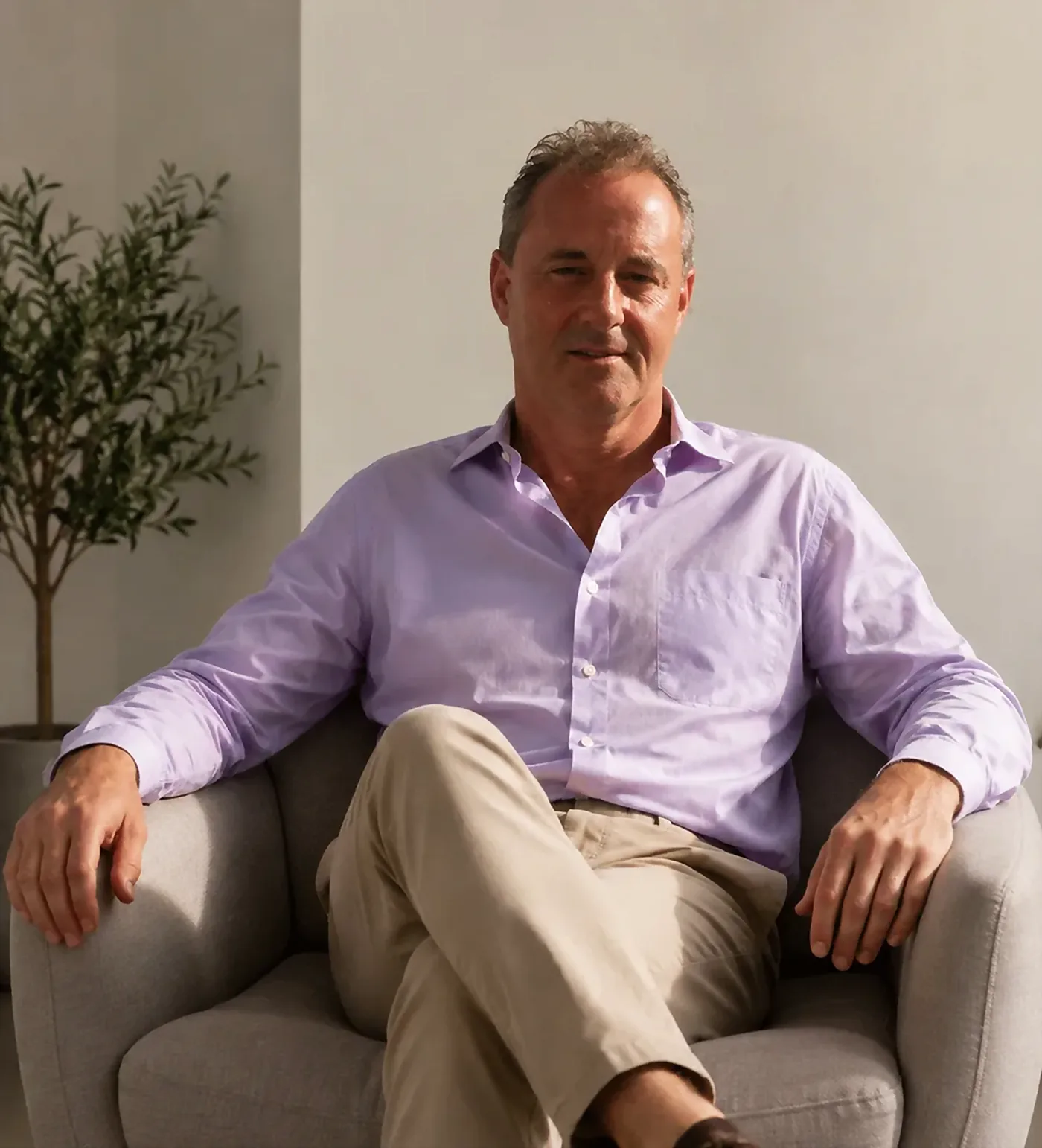
Stuart DowningThe person you’ll speak to on the free call 4.9 from 210+ reviews
  • Free and confidential
  • No referral or diagnosis needed
  • Evenings and Saturdays
  • In Edgbaston or online
Book a free 30-minute call
A mobile is easiest. I’ll call from 07825 599340.

This form isn’t monitored around the clock. If you’re in danger right now, call 999, or NHS 111 and choose the mental health option (2). Samaritans: 116 123 (free, 24/7). Text SHOUT to 85258.

Call 07825 599340 Book a free call