Track your month
Note your mood, sleep and urges each day for a cycle. If a pattern shows up, you can plan lighter days and extra support for the hard week.
Need help right now? 999 NHS 111, option 2 Samaritans 116 123 Text SHOUT to 85258
Women are diagnosed with borderline personality disorder (BPD), which NHS letters often call emotionally unstable personality disorder (EUPD), more often than men. Some get the label when something else fits better, and some wait years for anyone to notice. Here’s what to know, and where to find help.
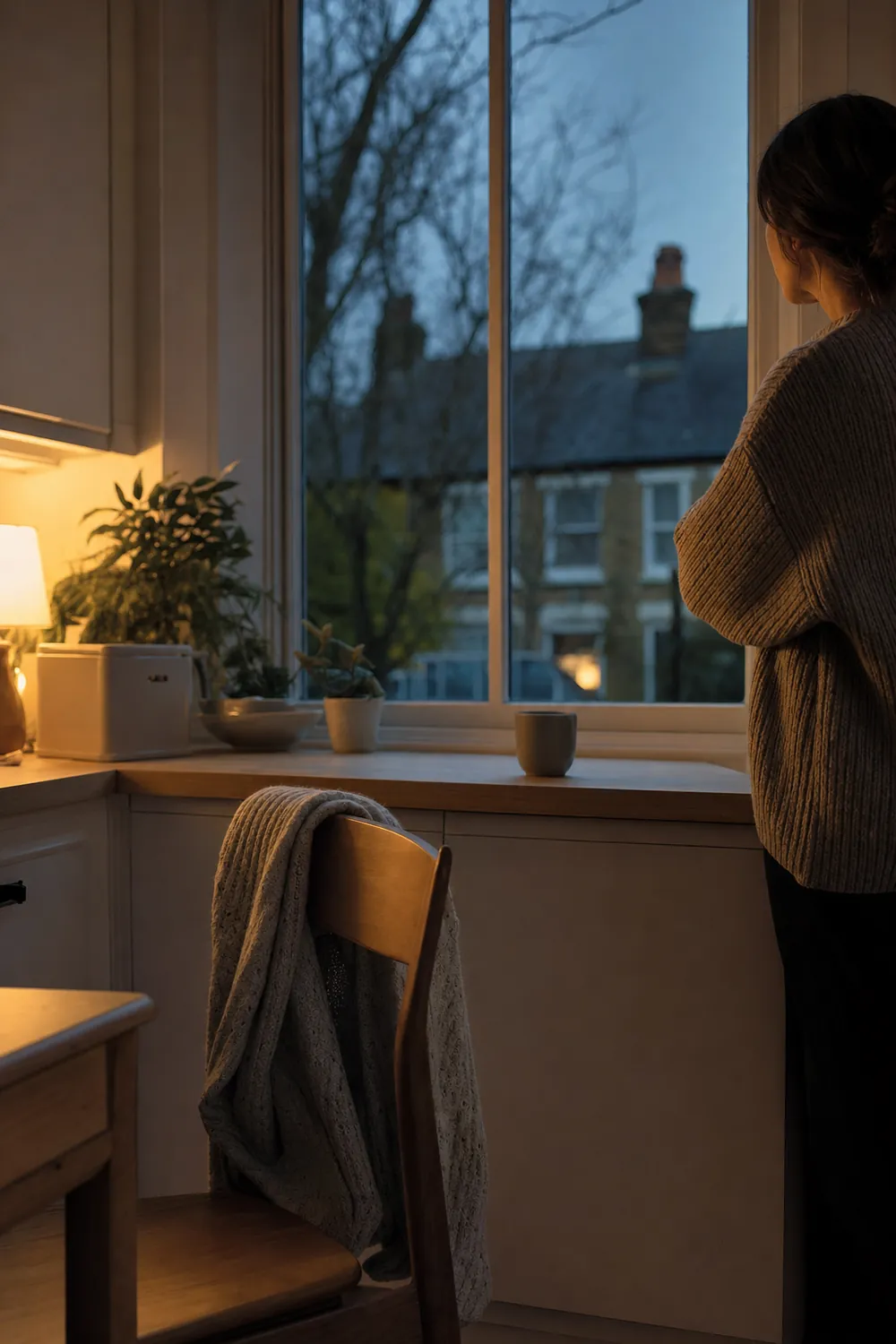
Sound familiar?
Women describe these experiences again and again, often long before anyone mentions BPD.
Rethink Mental Illness says BPD seems to affect men and women in equal numbers, but women are more likely to be diagnosed. The gap seems to come from who gets assessed, and how the signs are read.
Women are more likely to seek help for their mental health, so they are more likely to be assessed. And the textbook picture of BPD, with self-harm, fear of abandonment and changing moods, matches the way distress tends to show up in women.
Men with the same pattern more often show it through anger, drink or drugs, and can end up in other services instead. The result is that BPD can look like a “women’s condition” when it isn’t.
For you, that cuts both ways. A diagnosis may come sooner. But it can also come too fast, before other explanations have been ruled out.
Autism and ADHD in women are often missed or picked up late, and some women are diagnosed with BPD first.
The overlap is real. Autistic women may have intense reactions, difficult relationships and an unsteady sense of who they are, often after years of masking, which means hiding your natural ways of being to fit in. ADHD brings impulsivity and big emotions. Both can look like BPD from the outside.
A 2024 Dutch study of 1,211 autistic adults found that 31.7% of autistic women felt an earlier psychiatric diagnosis had been wrong, compared with 16.7% of men. Personality disorders were the diagnosis people most often questioned.
Some people have BPD and autism or ADHD together. If you think something else might explain your experience better, ask your GP about an assessment. I can’t diagnose either way, but I can help you work out what to ask.
Many women notice their BPD symptoms change with hormonal shifts: in the days before a period, during pregnancy and after birth, and around perimenopause.
The research here is still growing. What’s clear is that big life changes and disrupted sleep put pressure on emotions that are already hard to steady. Pregnancy and a new baby can also bring old fears of abandonment and of not being good enough to the surface.
If you’re pregnant or have a baby under one, your GP or midwife can refer you to perinatal mental health support. Tell them about your diagnosis or your history. That helps them plan with you, and it is not a reason to judge you.
BPD in pregnancy and after birth BPD and perimenopauseThings to try
These are adapted from dialectical behaviour therapy (DBT). They work best when you practise them on an ordinary day, before you need them.
Note your mood, sleep and urges each day for a cycle. If a pattern shows up, you can plan lighter days and extra support for the hard week.
Look after the basics: physical health, eating, avoiding mood-altering substances, sleep and exercise. Each one makes emotions easier to steady.
If you look after everyone else, schedule thirty minutes a week that belong to you. Treat it as an appointment you keep.
Most of the people I work with are women, many with a BPD or EUPD diagnosis, and some who were never sure the label fitted.
We start with DBT-informed skills for the moments when emotion takes over, and with a plan for the harder weeks, including any link to your cycle. Then we look underneath: trauma with EMDR when you’re steady, and schema-informed work on beliefs such as “I’m too much” or “I’ll be left”.
If you’re pregnant, postnatal or in perimenopause, I’ll ask about the care you already have. I work alongside your GP, midwife or NHS team, never instead of them.
The evidence
Here are the main findings on BPD in women, with their limits.
If you’re thinking about ending your life, have hurt yourself and need medical help, or feel you can’t keep yourself safe, get help now. You don’t need to be sure it’s an emergency.
I’m not an emergency service and can’t reply around the clock.
In their words
4.9
from 210+ reviews on Trusted Practitioner
I have started therapy with Stuart at a point of my life where I was in a toxic relationship, confused, suffering from anxiety and unhappy. … He took me step by step through the exercises and explained their purpose, he taught me how to apply them whenever I needed.
Questions
Women are diagnosed more often, but Rethink Mental Illness says BPD seems to affect men and women in equal numbers. The gap has more to do with who gets assessed and how the signs are read.
It’s possible. The conditions overlap, and autistic women in particular report being misdiagnosed. Ask your GP about an assessment, and know that some people have both.
Many women notice symptoms are harder to manage in the days before a period. Tracking your mood for a few cycles shows whether that’s true for you, and helps you plan.
Yes. Many women with BPD have children. Tell your GP or midwife about your diagnosis so they can offer the right support during pregnancy and after birth.
No. I work with anyone with BPD or EUPD traits, whatever their gender, in Edgbaston or online across the UK.
Get in touch
Tell me a little about what’s going on. You don’t need a diagnosis, and you don’t need to have it all worked out.
Rather text? 07825 599340
Or email stuart@stuartdowning.co.uk