Your history and your pattern
Where you’ve come from, and what a hard day looks like now: the trigger, the feeling, what you do next and how you feel afterwards.
Need help right now? 999 NHS 111, option 2 Samaritans 116 123 Text SHOUT to 85258
Starting therapy is easier when you know what each step looks like. Here’s how therapy for borderline personality disorder (BPD), also called EUPD, runs with me: the free call, session one, the work in between, how long it takes, and how it ends.

A short video
If reading a long page feels like too much right now, start here. I talk through what therapy with me is like, in under two minutes.
Everything in the video is set out below in more detail, step by step, so you can come back to any part when you need it.
The first step is a free, confidential 30-minute call by phone or video. You don’t need a diagnosis or a referral, and you don’t need to have the right words.
I’ll ask what’s going on for you now, what you’d like to be different, and whether you’ve had therapy before. I’ll also ask about safety, in plain words, because it helps me know what to plan for first. You can ask me anything: how I work, what it costs, how long it might take.
If I’m not the right person, I’ll tell you, and I’ll suggest where to go instead. If we both think it fits, we book a first session. If you want time to think, that’s fine too. Nobody chases you.
Your first session
The first session is an introductory discovery session. It lasts 60 to 90 minutes and costs £165. It’s a session of listening and mapping, so you don’t have to arrive with anything prepared.
Where you’ve come from, and what a hard day looks like now: the trigger, the feeling, what you do next and how you feel afterwards.
If self-harm or suicidal thoughts are part of your life, we talk about them without judgement and agree what you’ll do on the worst days.
We agree a concise plan for moving forward: what we’ll work on first, why, and one or two skills to try before we meet again.
Most of the change happens between sessions, when you try a skill on a real day and bring back what happened. Sessions are where we look at that together and adjust.
Between sessions I’ll ask you to practise one or two things, such as a breathing skill or a note of what set off a bad evening. It should take minutes, not hours. If you don’t manage it, we look at what got in the way. Nobody gets told off.
Bad weeks will happen. You might have a row you regret, cancel plans, drink more, or feel like stopping therapy. None of that means it isn’t working. It gives us something real to work on.
If you’re in danger, don’t wait for a session. Call 999, or NHS 111 and choose option 2. Samaritans are on 116 123, free, day and night. I’m not a crisis service.
Over time
NICE advises against brief therapy of under three months for BPD, so plan on months, not weeks. How many months depends on you, and we review it together.
Weekly sessions while we build the plan and the first skills. The aim is fewer crises and a little more room to think before you act.
Deeper work on old beliefs, trauma and relationships, with skills practice carrying on. Progress here is uneven, and that’s normal.
When the skills hold on hard days, we meet less often. You decide the pace with me, and nothing ends without warning.
Where we meet
You can switch between them if your week changes. Here’s what each one is like.


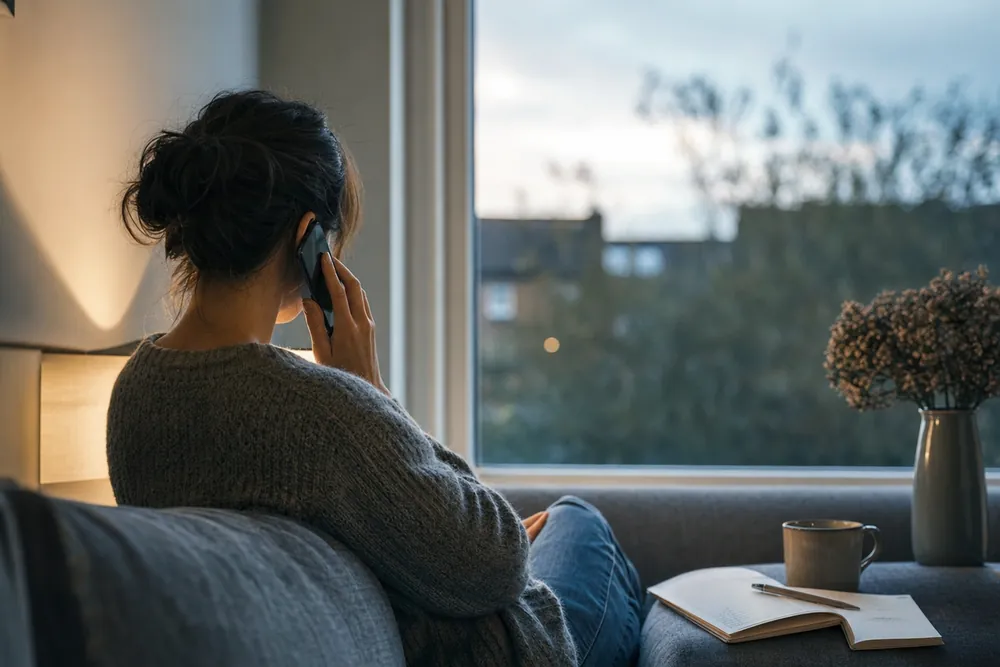
Therapy with me doesn’t end with a sudden discharge. We plan the ending together, so it feels like a step you’ve chosen.
As things settle, sessions spread out, perhaps to every two weeks, then monthly. Before we stop, we agree a plan for bad weeks: your early warning signs, the skills that work for you, and who you’ll call.
If things get hard again later, you can book back in. Coming back isn’t failure. A few sessions in a hard patch can help you get back to the skills that worked.
Questions
We go through your history and the pattern as you live it now, and talk about safety. We agree a concise plan for moving forward, and you leave with one or two skills to try that week.
No. Skills and safety come first. We get to the past when you feel ready, at a pace you can manage.
Weekly at the start, in most cases. Later they spread out as the skills hold up. We agree the rhythm together.
That’s all fine, and it often helps the work. You can pause, stop or take a breath at any point. Nothing you feel in the room will make me end therapy.
You can call, text or email to arrange or move sessions. I can’t offer crisis support between sessions, so we build a plan for hard moments with the crisis numbers in it.
Many people find online sessions easier to fit around work and family, and the plan is the same. If you’d find it hard to talk in private at home, Edgbaston may suit you better. We can talk it through on the call.
Get in touch
Still unsure? Ask me anything on the call. There’s no cost and no commitment.
Rather text? 07825 599340
Or email stuart@stuartdowning.co.uk