Cold water
When emotion spikes, hold cold water on your face for 30 seconds. It slows your heart and buys you time to think.
Need help right now? 999 NHS 111, option 2 Samaritans 116 123 Text SHOUT to 85258
Borderline personality disorder (BPD), which NHS letters often call emotionally unstable personality disorder (EUPD), is diagnosed from nine patterns. Here is each one in everyday words, with a line on what it can feel like from the inside.
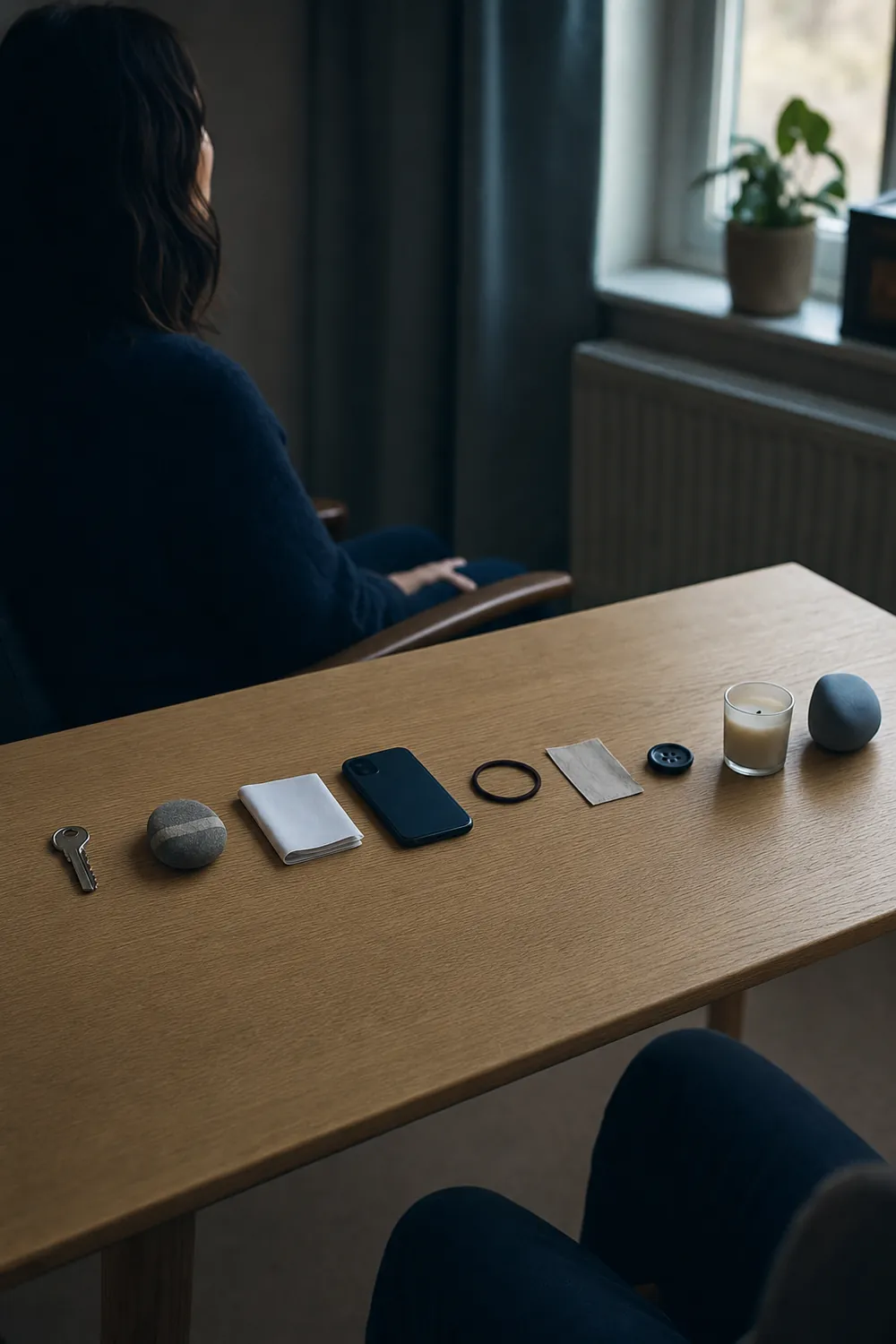
Sound familiar?
These are the moments people describe most often before they ever hear the word borderline.
Each symptom below uses the plain wording of the criteria, then what people tell me it feels like. You might recognise all nine, or two or three.
Working hard to avoid being left, whether the threat is real or imagined. What it feels like: a late reply lands like proof they’re about to go.
Swinging between seeing someone as wonderful and seeing them as cruel or useless. What it feels like: love and fury about the same person, in the same day.
Your goals, values, tastes and sense of who you are keep changing. What it feels like: you become whoever the room needs, then wonder who is left.
In at least two areas, such as spending, sex, substances, reckless driving or binge eating. What it feels like: the urge is louder than the consequences, until afterwards.
Repeated self-harm, suicidal threats, or attempts. What it feels like: a way to make unbearable pain stop for a moment.
Intense low, anxious or irritable moods that last hours, and seldom more than a few days. What it feels like: weather that changes faster than you can dress for it.
A long-lasting sense of being hollow or numb. What it feels like: a gap inside that food, people or noise never fill for long.
Anger that is out of proportion or hard to control, sometimes followed by shame. What it feels like: the rage is there before the thought, and the guilt arrives later.
Brief suspicious thoughts, or feeling unreal or cut off, when under strain. What it feels like: you watch yourself from a distance, or feel sure people are against you.
Want more detail on each one? My longer article goes deeper, criterion by criterion. BPD signs and symptoms in depth
A diagnosis of BPD needs at least five of the nine symptoms, present since your teens or early adulthood and showing up across work, home and relationships.
That rule comes from DSM-5, the US manual. The NHS has long used ICD-10, where the same picture is called emotionally unstable personality disorder, so you may see EUPD on a clinic letter and BPD in a book. Both describe the same experience.
The maths matters less than it sounds. Five of nine means two people with BPD can share only one symptom, which is why it looks so different from person to person. Someone with three or four can still be struggling a great deal and deserve help.
A checklist on a website can’t diagnose you, and neither can I. A psychiatrist does that after a full assessment, which also rules out conditions that look similar, such as complex PTSD or bipolar disorder.
Most of the nine come back to one thing: emotions that rise fast, hit hard and take a long time to settle.
When feelings are that intense, the other symptoms follow. Fear of being left makes relationships feel like life or death. Impulsive acts and self-harm become ways to get relief. Shifting moods make it hard to hold on to a steady sense of who you are.
Researchers think BPD comes from a sensitive temperament meeting an environment that didn’t help you handle big feelings. For many people that includes trauma, but not for everyone. I cover that link on its own page, so you can read it when you’re ready.
BPD and childhood traumaThings to try
These come from dialectical behaviour therapy (DBT). They won’t change the pattern on their own, but they give you something to do in the moment.
When emotion spikes, hold cold water on your face for 30 seconds. It slows your heart and buys you time to think.
Stop, take a step back, observe what’s happening, then proceed with care. A few seconds between feeling and acting is enough to start.
Say the emotion and its strength out of ten. Naming a feeling makes it easier to notice it rising before it takes over.
I don’t try to work on all nine at once. In the first session we pick the two or three that cause you the most trouble, and start there.
For most people that means skills first: DBT-informed tools for the moments when emotion takes over. Once those hold up, we look at what drives the pattern, which can include EMDR for old trauma and schema-informed work on the beliefs underneath.
I work alongside your GP or NHS team, never instead of it. Whether or not you have a diagnosis, we work on what you’re living with.
A short video
A short video on why BPD is so often described as instability, and what that means day to day.
Instability here means that emotions, thinking, relationships, sense of self and behaviour can all shift quickly. Many people describe it as an emotional roller coaster, with a fear of being left close underneath.
The nine signs above are the formal version of the same picture.
The evidence
BPD symptoms respond to therapy, and they tend to ease with time. The research has limits, and I’d rather you knew them.
If you’re thinking about ending your life, have hurt yourself and need medical help, or feel you can’t keep yourself safe, get help now. You don’t need to be sure it’s an emergency.
I’m not an emergency service and can’t reply around the clock.
In their words
4.9
from 210+ reviews on Trusted Practitioner
… coming up against many therapists who don’t want to treat anyone with BPD, I found Stuart via facebook and contacted him. … the improvement has been noticeable and huge.
Questions
Fear of abandonment, unstable relationships, an unsteady sense of self, harmful impulsive acts, self-harm or suicidal behaviour, fast-changing moods, chronic emptiness, intense anger, and paranoia or dissociation under stress. A diagnosis needs at least five.
No. EUPD is the ICD-10 name used in many NHS records, and BPD is the DSM-5 name. The experiences are the same, though ICD-10 groups them in its own way.
Yes. Many people have one to four of the nine. That’s sometimes called having BPD traits, and it can still be worth getting help.
People use it for a period when emotions surge and the symptoms take over, often after a trigger such as rejection. It isn’t a clinical term, and episodes can last minutes or days.
For many people, yes. The NHS says many people with BPD overcome their symptoms and recover over time. Therapy and skills practice can help that happen sooner.
Get in touch
You don’t need a diagnosis to talk to me. Tell me which symptoms affect you most.
Rather text? 07825 599340
Or email stuart@stuartdowning.co.uk